
Keynotes
Learning & Operator based Control Design of Nonlinear Systems with Smart Material Actuators and Sensors
Mingcong Deng, Professor, Tokyo University of Agriculture and Technology, Tokyo, Japan
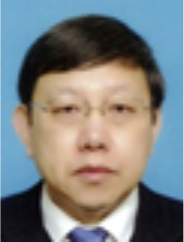
Abstract: Learning based nonlinear control design is necessary to compensate nonlinear factors. Recently, smart materials have been used as actuators and sensors in many nonlinear dynamic systems to realize the reduction in size and weight of the systems, such as piezoelectric elements, shape-memory alloy etc. In this talk, nonlinear control schemes for plants with piezoelectric actuators & sensors based on operator theory is introduced, nonlinear control for a plant using an interactive shape memory alloy actuation is also shown. The merits of the control design are that the nonlinear dynamics from actuators & sensors is considered. Further, some current results are shown to combine learning schemes.
Biography: Prof. Mingcong Deng received his PhD in Systems Science from Kumamoto University, Japan, in 1997. From 1997.04 to 2010.09, he was with Kumamoto University; University of Exeter, UK; NTT Communication Science Laboratories; Okayama University. From 2010.10, he has been with Tokyo University of Agriculture and Technology, Japan, as a professor. Prof. Deng has over 550 publications including 210 journal papers in peer reviewed journals including IEEE Transactions, IEEE Press and other top tier outlets. He serves as a chief editor for 2 international journals, and associate editors of 6 international journals. Prof. Deng is a co-chair of agricultural robotics and automation technical committee, IEEE Robotics and Automation Society; Also a chair of the environmental sensing, networking, and decision making technical committee, IEEE SMC Society. He was the recipient of 2014 & 2019 Meritorious Services Award of IEEE SMC Society, 2020 IEEE RAS Most Active Technical Committee Award (IEEE RAS Society) and 2024 IEEE Most Active SMC Technical Committee Award (IEEE SMC Society). He is a fellow of The Engineering Academy of Japan, and a fellow of IEEE, AAIA and AIIA.
Computational medical imaging for cerebral diseases
Pr. Dr Christine Fernandez-Maloigne, Poitiers University, France

Abstract: Early detection plays a key role in the diagnosis of numerous pathologies and can improve long-term survival rates, in better conditions. Medical imaging has been widely used for many years for the early detection of cancer, for example, its surveillance and post-treatment follow-up. However, manual interpretation of very large numbers of medical images can be tedious, so by the early 1980s computer-assisted diagnostic systems were developed. Recently, to develop automatic analysis systems, the researchers drew on the human brain to build “expert systems”, known as Artificial Intelligence (AI), based on learning as our brain does to recognize people, objects, places. These developments have enormous potential for medical imaging, analysis of medical data in general, aid in medical diagnosis, prognosis and follow-up of care. We propose to detail the latest advances in the field of cerebral diseases.
Biography: Christine Fernandez-Maloigne is currently Professor of Image Processing at the University of Poitiers, co-founder and co-director of a joint laboratory between the CNRS, SIEMENS Healthineers, the University and the Poitiers University Hospital, in the field of AI and medical imaging, I3M (Metabolic, multi-nucleus, multi-organ imaging) Labcom. At national level, she was a member of the National Scientific Research Committee (CoNRS) and the National University Committee (CNU) from 2008 to 2022. She was also part of the French AFNOR delegation for the ISO JPEG compression standards. She is an expert for several national agencies (ANR, HCERES, AID, Campus France, etc.). At the international level, she is an expert for the European Commission and several European research agencies, such as the DAAD. She has also been the French representative in CIE Division 8 (Image Technologies) from 2006 to 2024 and secretary from 2015 to 2024. She is a member of the editorial board of several international journals such as Engineering Applications of Artificial Intelligence. She is a IEEE and OSA fellow. She was awarded the Augustin Fresnel National Prize for her work in colour and multivariate image processing.
Oceans and algorithms: building successful collaborations in marine science and computer vision
Dr Stefano Schenone, University of Auckland, New Zealand

Abstract: In recent years, the convergence of marine science and computer vision has opened new avenues for advancing ecological research through automation, large-scale data analysis, and novel insights into marine systems. From habitat mapping using remotely operated vehicles to species identification in vast image datasets, computer vision has become a powerful tool for addressing complex marine challenges. At the same time, these applications often push the boundaries of standard computer vision workflows, requiring adaptations to the unique conditions and questions inherent to marine environments. This paper emerges from years of interdisciplinary collaborations between marine and computer vision scientists who have worked together at the interface of these two domains. Rather than focusing on singles studies or innovations, we take a step back to reflect on the collaborative processes that underpin successful projects. We believe that there is substantial value in documenting not only what was achieved, but how interdisciplinary teams worked together to achieve it. First, we share collective lessons learned – both positive and cautionary – from real-world projects that required sustained communication across disciplinary boundaries. Second, we propose a set of practical guidelines for others entering similar collaborations, grounded in both technical and interpersonal considerations. Finally, we present a blueprint for structuring and sustaining effective partnerships between marine ecologists and computer vision scientists, offering a process-focused perspective that complements existing methodological literature. By bringing together perspectives from both fields, this paper seeks to contribute to the growing discourse on interdisciplinary research practices in environmental informatics and applied AI. We hope it will serve as a useful resource for researchers navigating similar partnerships, as well as for institutions and funders seeking to better support such work.
Biography: Stefano Schenone is a post‑doctoral research fellow in the University of Auckland’s Institute of Marine Science. After earning a PhD in Marine Science (Dean’s List, 2020), his work has focused on how small‑scale seafloor features drive large‑scale ecosystem functioning. Combining field ecology with computer‑vision and remote‑sensing techniques, he maps benthic micro‑topography, links it to biodiversity and biogeochemical processes, and develops image‑based indicators that can support coastal‑management decisions. He has co‑authored papers on soft‑sediment micro‑topography, hyperspectral wavelength selection, and ecosystem‑service assessment, and is an active collaborator in the Sustainable Seas National Science Challenge.